
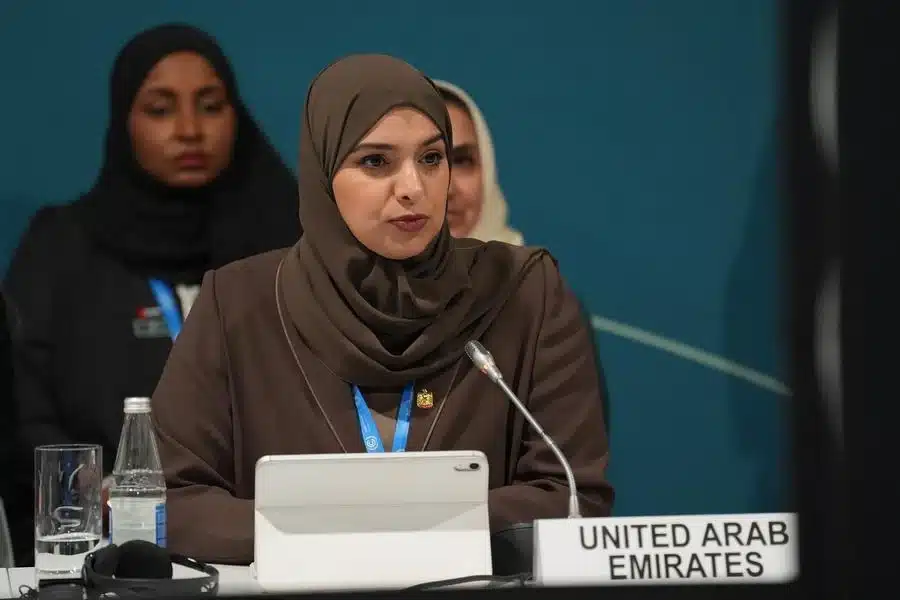
DUBAI, UAE – On the occasion of the International Day for Biological Diversity, Dr. Amna bint Abdullah Al Dahak, Minister of Climate Change and Environment, reaffirmed the United Arab Emirates’ strong commitment to the protection of its rich biodiversity and the preservation of ecosystems both on land and in water.
This year’s global theme, “From Agreement to Action: Build Back Biodiversity,” reflects the UAE’s urgency and proactive approach toward biodiversity preservation. Dr. Al Dahak emphasized that the General Framework of the National Biodiversity Strategy 2031 embodies this vision and provides a comprehensive action plan to address the pressing challenges of biodiversity loss and climate change.
“We recognise that protecting biodiversity and championing nature-based solutions are not simply environmental add-ons; they are the essential foundation upon which all our efforts to combat climate change and achieve lasting sustainability must be built,” Dr. Al Dahak said.
National Framework and Protected Areas
The UAE currently maintains 49 designated protected areas, covering more than 15 percent of its total territory. These areas are instrumental in preserving the country’s diverse natural habitats, including deserts, mountain ranges, and coastal and marine environments. These ecosystems are vital for maintaining ecological balance and providing shelter to various endangered and indigenous species.
The successful reintroduction of the Arabian Oryx, once on the brink of extinction, stands as a significant milestone in the UAE’s conservation journey. Through a combination of habitat restoration and sustained breeding programs, the species has been brought back to its natural habitat, reflecting the country’s dedication to wildlife protection and ecological resilience.
Innovation and Technological Integration in Conservation
The Minister also highlighted the pivotal role of innovation and technology in biodiversity management. The UAE is leveraging advanced tools and systems to enhance environmental monitoring and resource management. This includes the use of drones to combat desertification and conduct aerial surveys of vegetation, along with satellite-based tracking to support marine ecosystem protection.
In parallel, the Ministry continues to expand its database and scientific knowledge through collaborations with research institutions and universities, ensuring data-driven policy-making and adaptive conservation practices.
Global Collaboration and the Mangrove Alliance for Climate
The UAE’s commitment to biodiversity is not limited by geographical boundaries. On the global stage, the country remains actively involved in collaborative efforts to protect nature. One such initiative is the Mangrove Alliance for Climate (MAC), launched in partnership with the Republic of Indonesia.
As part of this alliance, the Mohamed bin Zayed–Joko Widodo International Mangrove Research Centre has been established on the island of Bali. This international research hub is dedicated to exploring the role of mangroves in carbon sequestration, coastal protection, and climate change mitigation, thereby contributing to global biodiversity goals.
Sustainable Agriculture and Food Security
Dr. Al Dahak further emphasized the connection between biodiversity conservation and national food security. The Ministry is actively working with farmers, agricultural experts, and industry stakeholders to develop sustainable farming systems that enhance biodiversity.
From May 28 to 31, the UAE will host the Emirates Agriculture Conference and Exhibition, offering a platform to transform environmental commitments into actionable strategies. The event will focus on strengthening local agriculture, boosting the production of strategic crops, and advancing livestock and fisheries sectors.
“In addition to supporting farmers and increasing local production of strategic crops, we will place special emphasis on the development of our livestock and fisheries—key pillars in strengthening both biodiversity and sustainable food security,” said Dr. Al Dahak.
A National Call for Participation and Innovation
In her closing remarks, Dr. Al Dahak extended an invitation to all sectors of society to participate in the national movement to protect biodiversity.
“I invite you to join us at this important event to explore innovative strategies that ensure a better future for both nature and humanity. Let us build a lasting legacy that future generations will be proud to carry forward,” she concluded.
The UAE continues to position itself as a global leader in environmental sustainability and biodiversity protection, with integrated national strategies, advanced technology, and strong international partnerships driving its vision toward a more resilient and biodiverse future.
